
Noticing the Invisible Hand at Work
By Anthony LaMacchia · Originally published
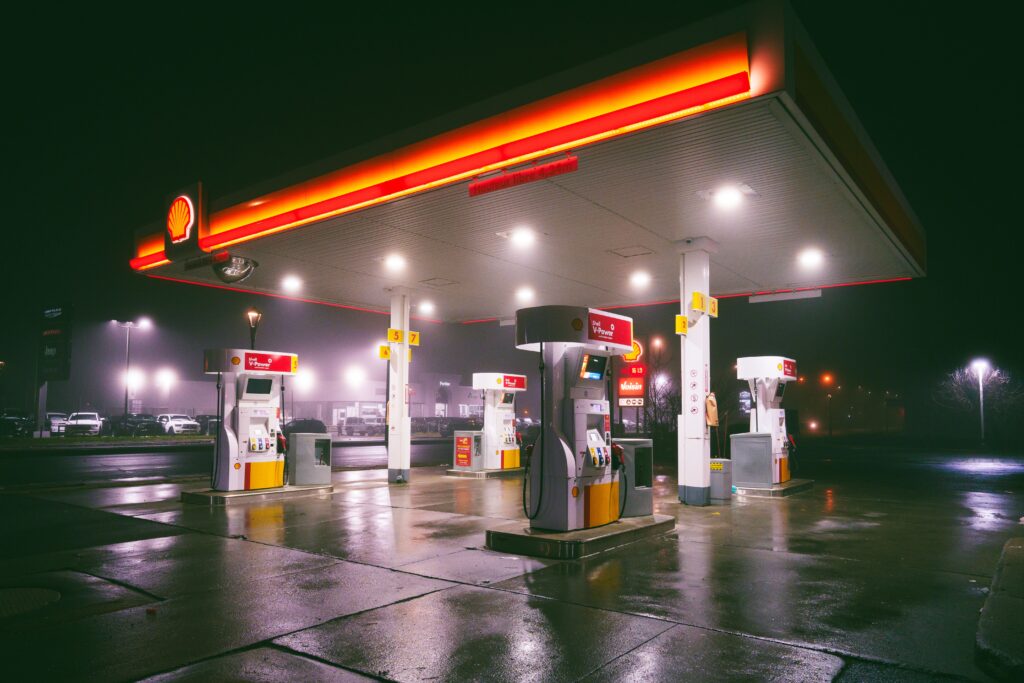
This morning I stopped for gas near my home in Grandview. Nothing eventful, just a normal Monday in August. But while I stood there with the pump handle in my hand, I found myself doing something I don’t do often enough: looking up.
A handful of cars sat scattered across the lot. The Starbucks sign glowed above the Giant Eagle entrance. A dry cleaner, a nail salon, a bakery, all going about their business on either side. And underneath my feet, several thousand gallons of gasoline sat in a tank, waiting for exactly this moment. None of that happened by accident, and none of it happened as a result of one guy pushing all the buttons.
Consider what had to go right for me to fill my tank. Crude oil was pulled out of the ground somewhere – the Permian Basin in Texas, or the Bakken in North Dakota, or a field halfway around the world. It was shipped or piped to a refinery, cracked into gasoline, blended to the right octane, trucked to that specific gas station, and priced low enough that I’d choose it over the other one up the road, but high enough that the station turns a profit and the truck driver gets paid and the refinery keeps running. Every single person in that chain – the driller, the refiner, the trucker, the station manager – was certainly not thinking about me at all. They were thinking about their own paycheck, their own margin, their own Monday. And yet the result was gas in my tank.
Adam Smith gave this phenomenon its name in 1776: the invisible hand. His insight was that people acting in their own self-interest, when guided by open markets and honest prices, tend to produce outcomes that benefit everyone – not because anyone intended it, but because prices carry information. A rising price tells a driller to pump more. A falling price tells a refiner to slow down. Nobody has to understand the whole system for the whole system to work.
Leonard Read made the same point more vividly in his 1958 essay “I, Pencil,” written from the point of view of an ordinary pencil. No single person on earth, Read pointed out, knows how to make a pencil from scratch – not the logger who cuts the cedar, not the miner who digs the graphite, not the chemist who formulates the eraser. Thousands of people across dozens of countries, none of them coordinating with each other, none of them even aware of each other, cooperate to produce a five-cent pencil. If that’s true of a pencil, it’s certainly true of the parking lot I was standing in – the coffee, the gas, the cars themselves, each one an assembly of parts from a dozen countries, financed, insured, and driven by someone who trusted the whole arrangement enough to show up. “I, Pencil” is a short read, I highly recommend it.
I bring this up because it’s easy to forget. Turn on the news and you’ll hear that the country is falling apart, that the other side is destroying everything, that nothing works anymore. Some of that is real, and I’m not suggesting we don’t have problems. But standing at that pump, looking at a parking lot full of ordinary abundance that a person from almost any other point in human history would have considered miraculous, it’s worth remembering that the system underneath all the noise is still doing exactly what it’s supposed to do. It got gas into my tank, coffee into a cup, and everyone I could see to an ordinary Monday morning without a single one of them having to ask permission from anyone in charge. We’ve spent two and a half centuries building the plumbing that makes that possible. It’s not perfect, and it’s not automatic, but it works far more often, and far more quietly, than the noise around us would suggest. Sometimes it just takes standing still at a gas pump to notice.
And, as always, we have the same level of appreciation for the trust our clients place in us every day. That’s certainly not invisible, and we never take it for granted.
Have a question about your own plan?
We're glad to talk through how any of this applies to you.
Contact Us